

Homemade Gluten Free Bisquick
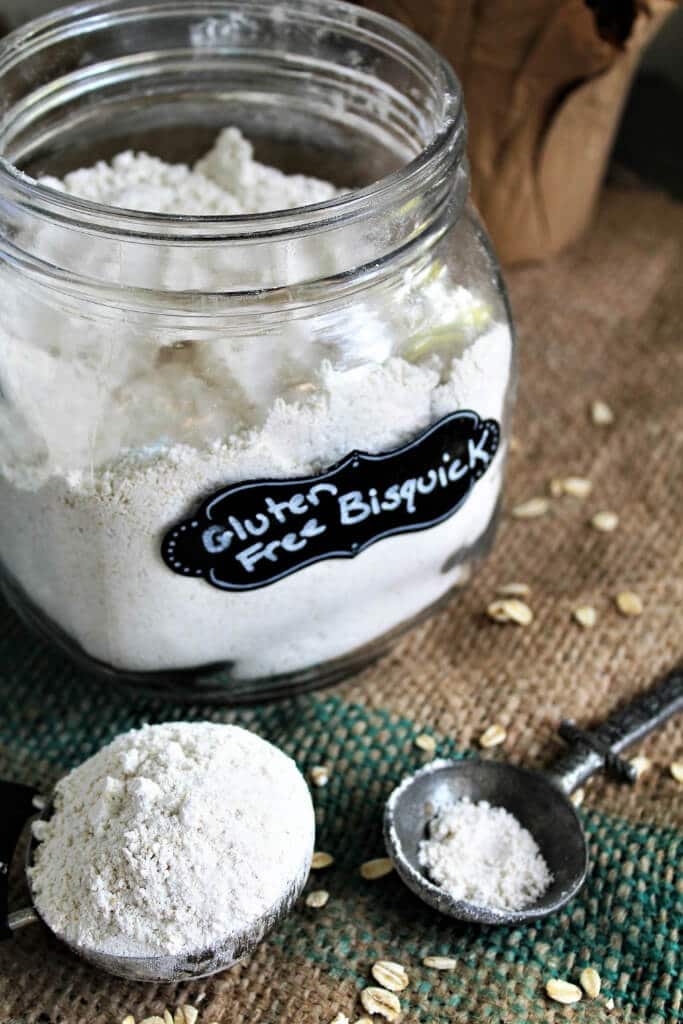
This homemade gluten-free Bisquick recipe is quick, easy, and delicious! It’s gluten-free, of course, vegan, and made with only a few simple ingredients.
Want to save this recipe?
Enter your email below and get it sent straight to your inbox. Plus, get more amazing vegan recipes that will satisfy your cravings!
Why make GF Bisquick
- You can use it as a 1:1 replacement for Bisquick in almost any recipe!
- It’s made mostly with healthy, whole-grain oats!
- You can easily grind your own gluten-free oats into flour, so they don’t lose nutrients.
- It makes the best gluten-free Biscuits that you’ll ever taste!
- You can make as much or as little as you need.
- You’ll never have to buy expensive gluten-free Bisquick-type mixes again!
- It has a similar protein content to wheat flour, so it bakes up similarly to wheat flour.
Ingredients and substitutions
- Oat flour – Made easily by simply grinding oats in your blender.
- Tapioca flour – for a smooth texture that binds and stretches.
- Xanthan gum – as a binder.
- Baking powder – to make it rise.
- Salt – for a little flavor
- Shortening – for added fat (optional). You can also add this when making the recipe you are using.
Helpful tools
- A Blender for grinding your own oats if you are using whole oats.
- A metal wire colander for sifting the flour.
How to make gluten-free Bisquick
A full printable version of this recipe with ingredient measurements is available at the bottom of this post.
Step 1 – Put gluten-free whole oats into a blender.
Step 2 – Blend for about 1 minute until the oats have turned into flour.
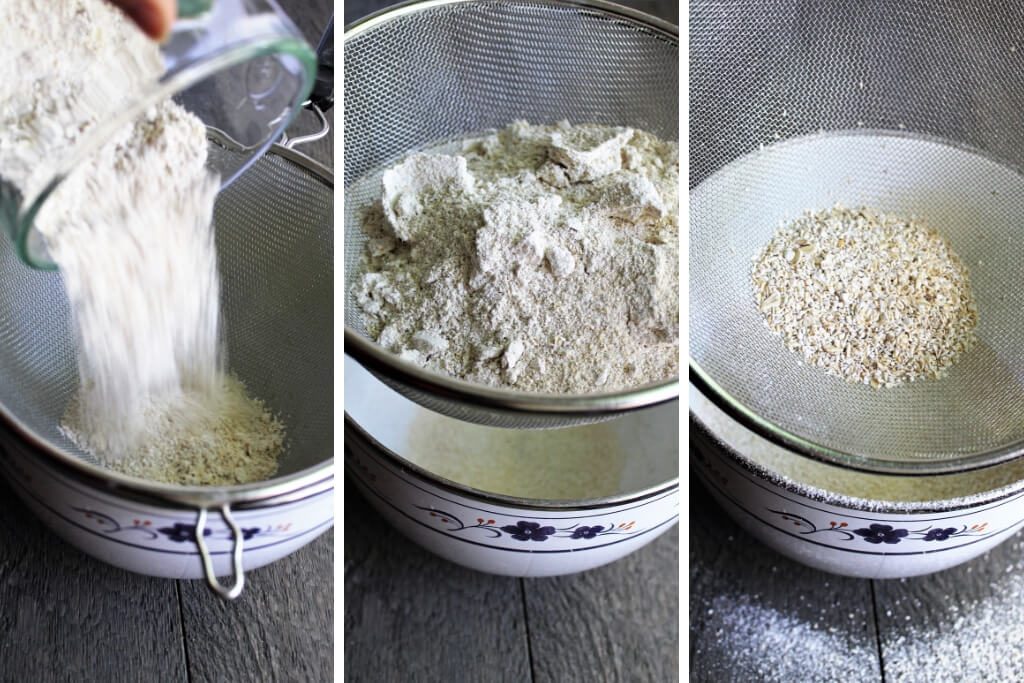
Step 3 – Pour into a wire-mesh strainer or a flour sifter, and sift over a large bowl until all the fine flour has fallen through. (Throw away the large pieces of bran that are left in the strainer.)
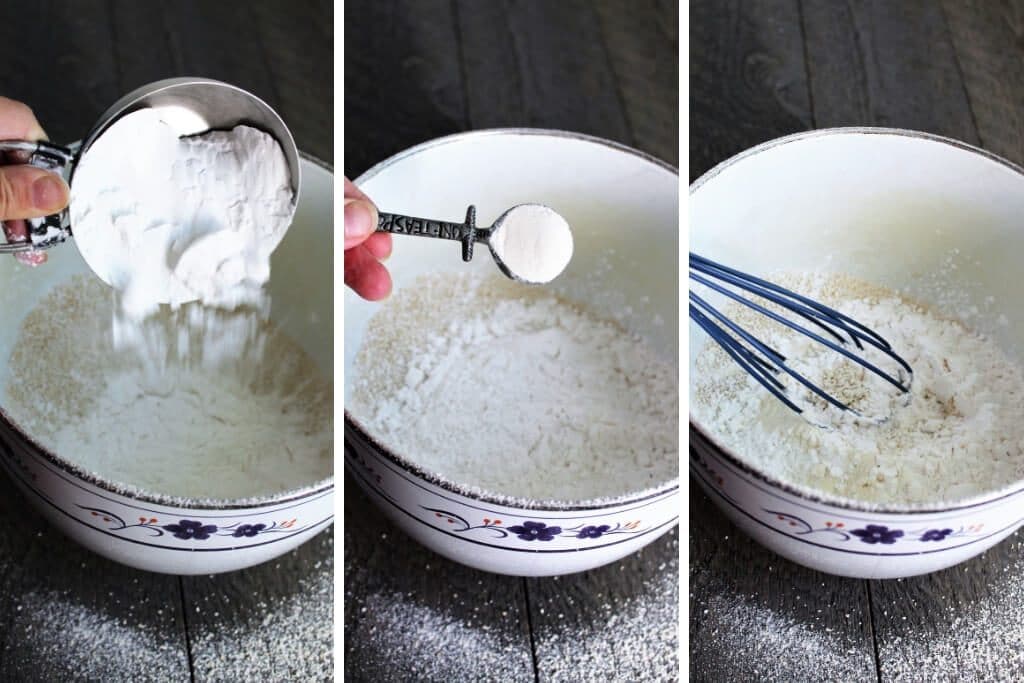
Step 4 – Add tapioca flour, xanthan gum, baking powder, and salt to the oat flour and then give it a good stir.
Step 5 – If you wish to add the shortening, add all the dry ingredients along with 2 tbsp of shortening to a food processor and blend until incorporated.
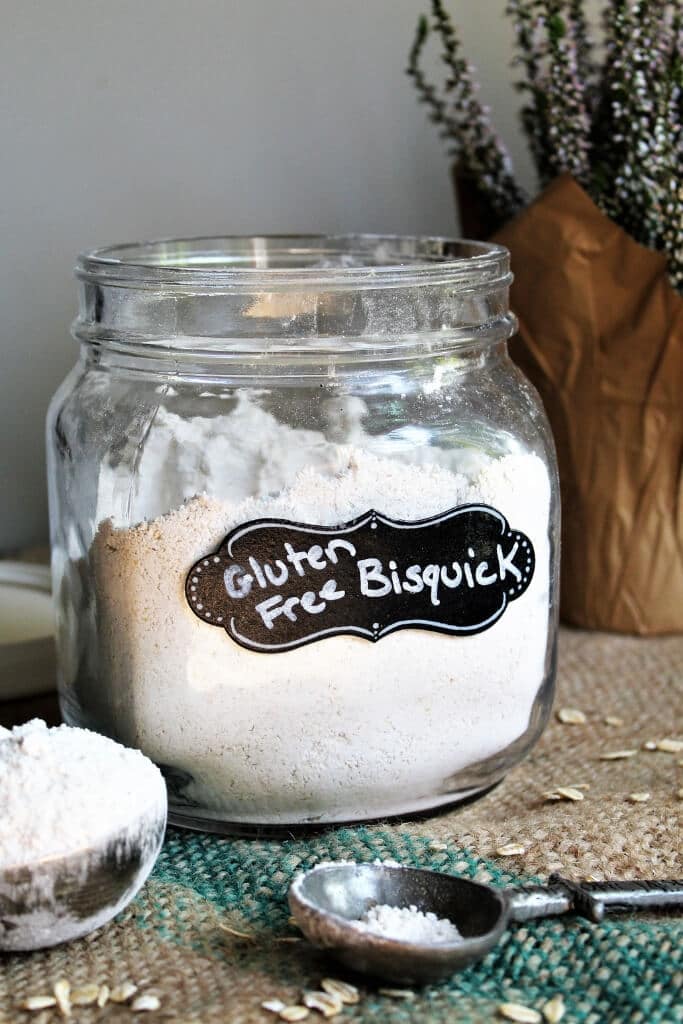
That’s it! You have just made your own gluten-free Bisquick that you can use in place of traditional Bisquick in any of your favorite recipes!
Pro Tips
- I have noticed that recipes occasionally require slightly more liquid when using this gluten-free Bisquick with homemade oat flour vs. store-bought flour.
- Homemade oat flour tends to have more bran than store-bought oat flour, and it works better when measured by weight rather than volume.
- Make sure to mix it well so the proportions are evenly distributed.
- You can leave out the shortening to make it fat-free.
What to make with gluten-free Bisquick mix?
This Bisquick makes delicious gluten-free drop biscuits, pancakes, or shortcake! Anything that you make with Bisquick can be swapped for this recipe to make it gluten-free!
My family’s absolute favorite recipe to make with this Bisquick is these Vegan Cheddar Bay Red Lobster Biscuits! They are simply amazing when made with this homemade Bisquick!
Storage
The gluten-free Bisquick will stay shelf-stable for up to a week on the countertop. You can put it in the freezer for up to 3 months to extend its shelf life. Note – Freshly ground oat flour has the most nutrients.
More homemade vegan basics
Gluten-free Bisquick recipe
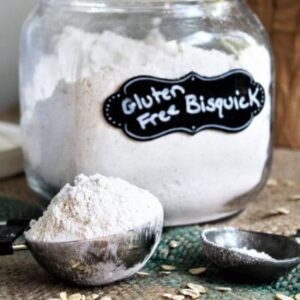


Homemade Gluten-Free Bisquick
Ingredients
- 1 3/4 cup whole oats, (gluten free)
- 1/2 cup tapioca flour, aka tapioca starch
- 2 tbsp baking powder
- 1 tsp salt
- 1 tsp xanthan gum
- 2 tbsp shortening
Instructions
- Put 1 3/4 cups of gluten-free whole oats into a blender and blend for about 1 minute, until the oats turn into flour.
- Pour into a wire-mesh strainer or a flour sifter, and sift over a large bowl until all the fine flour has fallen through. (Throw away the large pieces of bran that are left in the strainer.)
- Add tapioca flour, xanthan gum, baking powder, and salt to the oat flour and then give it a good stir.
- If you wish to add the shortening, add all the dry ingredients along with 2 tbsp of shortening to a food processor and blend until incorporated.
- Store in an airtight container for up to 3 months and use it as you would Bisquick.
Notes
- I have noticed that recipes occasionally require slightly more liquid when using this gluten-free Bisquick with homemade oat flour vs. store-bought flour.
- Homemade oat flour tends to have more bran than store-bought oat flour, and it works better when measured by weight rather than volume.
- Make sure to mix it well so the proportions are evenly distributed.
- You can leave out the shortening to make it fat-free.
 Did you make this recipe?Please leave a star rating and review below!
📌 Be sure to follow me on Pinterest for new vegan recipes!



Any substitute for oat flour? Many of us celiacs avoid oats because of the cross contamination. I’ve been glutened by oats before.
No, sorry, I don’t know what else would work to give you the same results. I always use certified gluten-free oats.
I’m so glad I found this! And thank you for making / sharing it! 🙂
The mention of buttermilk gave me a – possibly crazy – thought. Do you think I could add a little coconut milk Powder to the recipe??
I think a little coconut milk powder would work great. Let me know if you try it.
I can’t have oat , wheat, rye or white flour so what can I use?
I think that you would have to use brown rice flour, but I can’t promise that it will bake up the same. I have only tested this recipe with oat flour.
What should the measurement of the oat flour be after grinding the oats in a blender and sifting to remove the oat bran?
Hi Barbara, you should have 1 1/2 cups of oat flour after you grind and sift it. You can also use 1 1/2 cups of store-bought oat flour that has already been ground and sifted.
I haven’t tried your gf bisquick recipe yet, but want to use it for the sausage cheese balls for which I formerly used a name brand ready made mix. I like the idea of mixing dry ingredients and storing without adding shortening until time of use. What do you recommend for shortening? Have you tried coconut oil In place of shortening? If so, did that work well?
I have used both coconut oil and Crisco. They both worked well. Sometimes I even just leave it out completely. It makes a dry biscuit that way but works well for recipes like my cheddar bay biscuits where you let them soak up vegan butter after they bake. 🙂
Hi Monica,
Thanks so much for posting this Bisquick substitute. I am excited to try it, as I much prefer using oats to rice. I pulverized the oats in my Vitamix blender. Only took 25 seconds for them to come out exactly the same texture as my Bob’s Gluten Free Oat Flour. The oats did lose a little volume. The 1 3/4 cup of oats made about 1 2/3 cup of flour. I see in your notes that I could measure by weight instead of volume. Can you explain that in more detail, please? Would I weigh the oats before blending or after? How many grams or ounces would that be? Thank you!
To use this as a 1:1 substitute in a recipe that calls for exact measurement, it is better to go by weight instead of volume. For example if your recipe calls for 1 cup or 120 grams of Bisquick, then weigh it and use 120 grams. Depending on the amount of bran in your oat flour and how much it has settled, this is usually about 1 cup plus 2 tbsp when making it from whole oats. I hope that helps. 🙂
Hi, Monica.
I’d love to try it but where I live, there is only quick cooking, instant, and rolled oats. Your link opens in quick cooking. I just wanna make sure that it’s the quick cooking oat that I should use to make this recipe. Thanks!!
You can use the quick-cooking or the rolled oats. I have used both and it has worked. Hope you enjoy it! 🙂
I don’t understand how much shortening to add to this dry mix to then measure the same amount as called for in a regular Bisquick recipe. Can you explain it in detail?
I like to keep mine fat free in the pantry and add the shortening at the time of making the biscuits or whatever. You can put all of the dry ingredients in a food processor with 2 tbsp of shortening and turn to high until it’s all incorporated. Then store in a jar in the fridge for up to 3 months.
Wondering about adding shortening. Most bisquick and diy bisquick has shortening in the mix (use spectra for vegan).
You will need shortening for most biscuit recipes made with this, but you can just use it as a 1:1 replacement for any recipe that calls for Bisquick. Things like pancakes won’t call for shortening, so it’s not in my base recipe. 🙂
I used this bisquick to make gluten free biscuits, they came out so much better than when I make them with the regular gluten free stuff that I get at the store. I love that it used whole grain oats too and not just a bunch of bleached milled grains! Thanks so much for this great recipe!